KuruMobi Tech Expo - from Car to Mobility has ended.
Thank you very much for your participation.
Details of the next event will be announced at a later date.


KuruMobi Tech Expo - from Car to Mobility has ended.
Thank you very much for your participation.
Details of the next event will be announced at a later date.
Creating experiential value that transcends transportation and transforms people's lives and society
itself.
―That is the essence of today's mobility revolution.
Beyond the boundaries of the automotive industry, innovators from technology companies, service providers, startups, and major corporations are all focused on redefining mobility.
This event, which elevates the insights gained from online exhibitions into real-world experiences, promotes cross-industry collaboration and is an excellent opportunity to establish your company's position in the next-generation mobility market.
Join the visionaries gathered here to fuse technology and ideas, envision the future of mobility
experiences, and become part of an ecosystem that drives tangible business results.
As the redefinition of mobility gains momentum, the ability to position yourself at the center of this
trend will determine the success or failure of your business.
We invite your company to join us as a player in co-creating the future of mobility at this historic
turning point.
Discover a hybrid program that blends on-site sessions at Tokyo International Forum with online sessions you can watch anytime, anywhere. Covering SDVs, autonomous driving, AI, mobility services, smart cities, energy, and more, leading players from automakers, technology firms, startups, and government agencies will take the stage. From the front lines of R&D to real-world deployment, the lineup explores every facet of next-generation mobility.

December 10,(Wed), Leaders from various fields will give lectures on future technologies at the Tokyo International Forum.


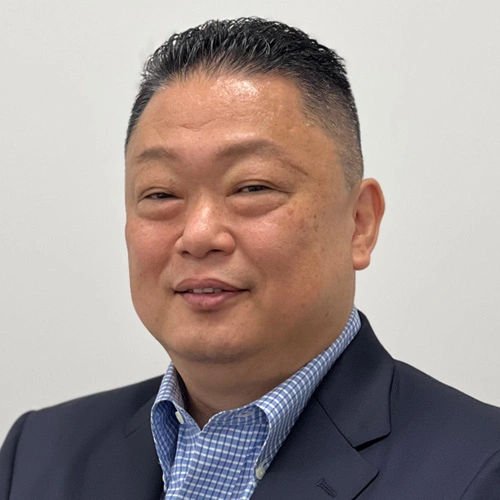
Takashi Hisaki
Cars are rapidly evolving into Software-Defined Vehicles (SDVs).
For SDVs, the ability to accurately grasp customer needs and deliver new value
in a timely manner determines the appeal of the vehicle.
We explain the evolution of the E&E architecture that realizes Honda's vision
for SDVs.

Tadayuki Aizawa
KDDI leverages its global connected car experience and operational monitoring expertise to support the future mobility society enabled by SDV autonomous vehicles and AI robots.
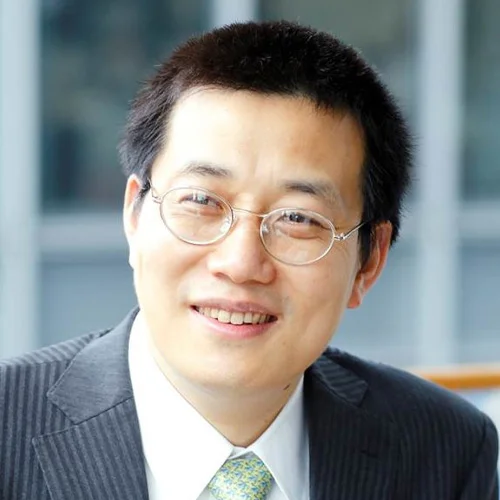

Lei Zhou
The global mobility industry is currently
transitioning from Software-Defined Vehicles to AI-Defined Vehicles, making AI
technology more critical than ever as the core competitive differentiator.
While keeping pace with these cutting-edge global trends, I will present the
latest developments in autonomous driving/ADAS and IVI/connected domains, the
insights derived from them, and the strategic stance Japanese companies should
adopt.

November 26 (Wed) 10:00to December 19 (Fri) 17:00
Each presentation will last approximately 30 minutes.

Advances in SDV (Software-Defined Vehicle) technology and the implementation of autonomous driving systems are expected to enable automobiles to deliver new value and services. Consequently, the environment surrounding the automotive industry—including its structure, development processes, and key technologies—is poised for significant transformation. Against this backdrop, I will discuss the government's strategy and future outlook.
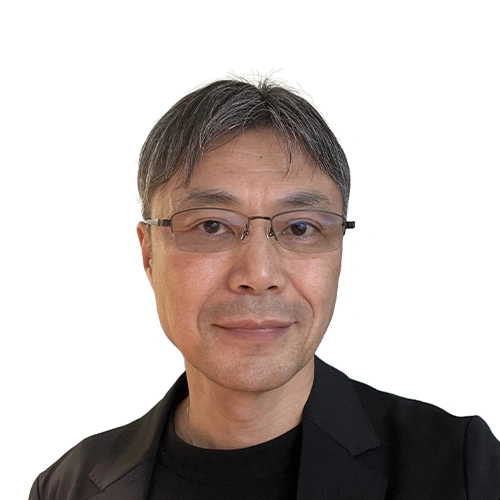
It has been over two years since the term SDV began gaining traction. It has even appeared in mainstream media as “software-defined vehicle.” Yet when asked, “What exactly is an SDV?” even industry insiders often respond vaguely, saying things like, “Well, there are various definitions.” This presentation will discuss the true meaning of SDV and, based on that understanding, explore the essential approaches required.
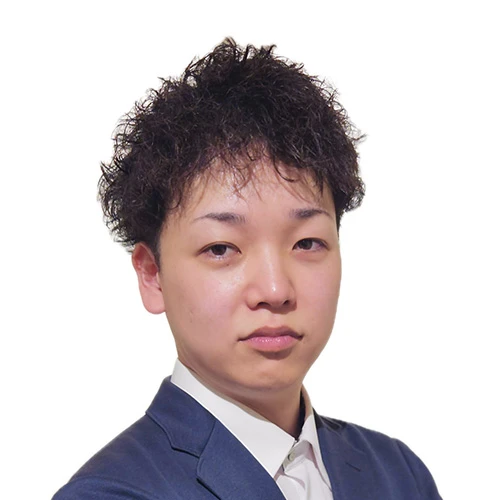
We introduce the democratization of autonomous driving expanding on the foundation of open-source Autoware, along with the latest trends and practical knowledge in End-to-End technology poised to become the next-generation standard.
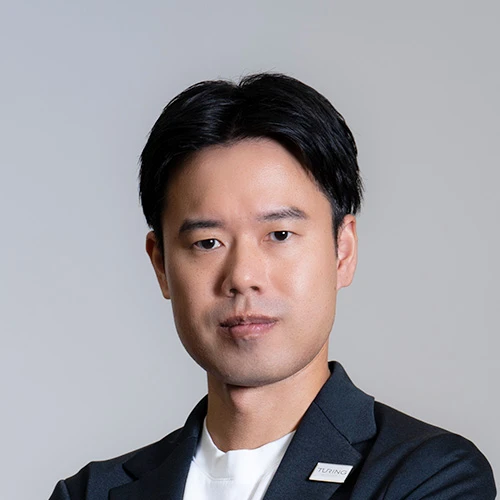
Physical foundation models that integrate visual, linguistic, and behavioral processing are gaining attention not only in autonomous driving but across diverse fields. This presentation will clearly introduce their progress and current state, incorporating Turing's latest development examples.
Expectations are growing for mobility services powered by Level 4 autonomous driving, which eliminates the need for drivers, as a future means of transportation. However, various challenges must be addressed to realize this vision, including safety, service operation and business viability, and user acceptance. This section introduces Nissan Motor Company's development and demonstration initiatives aimed at tackling these challenges.

For Japan to continue growing in the future, it is essential to enhance the appeal of its regions, including tourist destinations, and operate them sustainably. Within this context, I will discuss the current challenges in the indispensable “mobility” that connects these areas, and the new possibilities offered by services such as shared rides (carpooling and ride-sharing).
We aim to eliminate drunk driving violations and tragic accidents. By integrating over 70 years of automotive key technology with the latest digital keys, we strive to realize a safe and secure society through DX, utilizing a system that prevents the engine from starting after alcohol consumption.

Japan's social challenges—including the growing number of people with mobility difficulties and shortages in medical staff and drivers—are rapidly worsening. How can we solve these issues by combining mobility with systems and data? We introduce the “MaaS Frontline,” where teams are working tirelessly every day, listening to the voices of local governments and residents on the ground.

NTT DOCOMO introduces real-world applications of its mobile spatial statistics technology, which estimates “who is where and when” 24/7, including solutions for social challenges and AI-based traffic congestion prediction.

Our company aims to contribute to solving grid challenges by utilizing EVs, which are gaining traction amid the momentum toward carbon neutrality, as distributed energy resources (DERs) within the power grid. To this end, we will collaborate with overseas utilities SMUD and HECO to investigate control methods for DER utilization.
Electric vehicles used by transportation operators (route buses, delivery trucks) are equipped with larger-capacity batteries compared to passenger-type electric vehicles. This necessitates multiple rapid chargers even for basic charging within company facilities. We introduce a new concept in rapid charger technology that solves this challenge.
Toyota Motor Corporation is advancing initiatives to achieve Carbon Neutrality (CN) and a Circular Economy (CE) based on the Toyota Environmental Challenge 2050. This presentation will introduce our efforts related to CO₂ reduction and resource circulation.
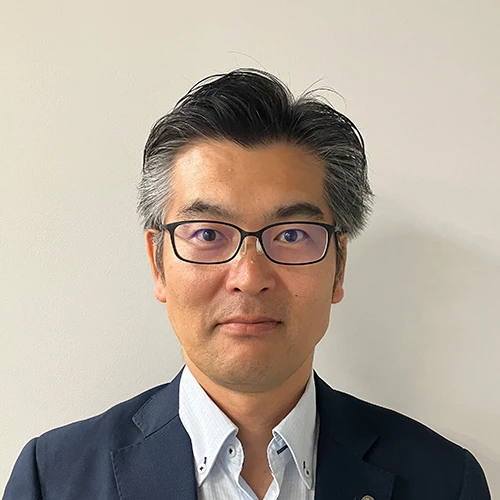
We will explain the situation surrounding hydrogen as an energy source (including Japanese government policies) and our company's initiatives for hydrogen stations aimed at realizing a hydrogen society.
Through a standing reception-style party,
you can interact with
speakers, exhibitors, and attendees.
Explore solutions and products that will support the future mobility society,
and discover
technologies transforming the fields essential for the next stage of automotive innovation.
We will hold seminars conducted by exhibiting companies.
We will present challenges, development methodologies, and product technologies required in new technology
fields, incorporating case studies from exhibiting companies.
We will hold a seminar on Mobility DX at the Tokyo International Forum venue.
Details hereYou can watch the online seminar on the exhibitor information page.
Details here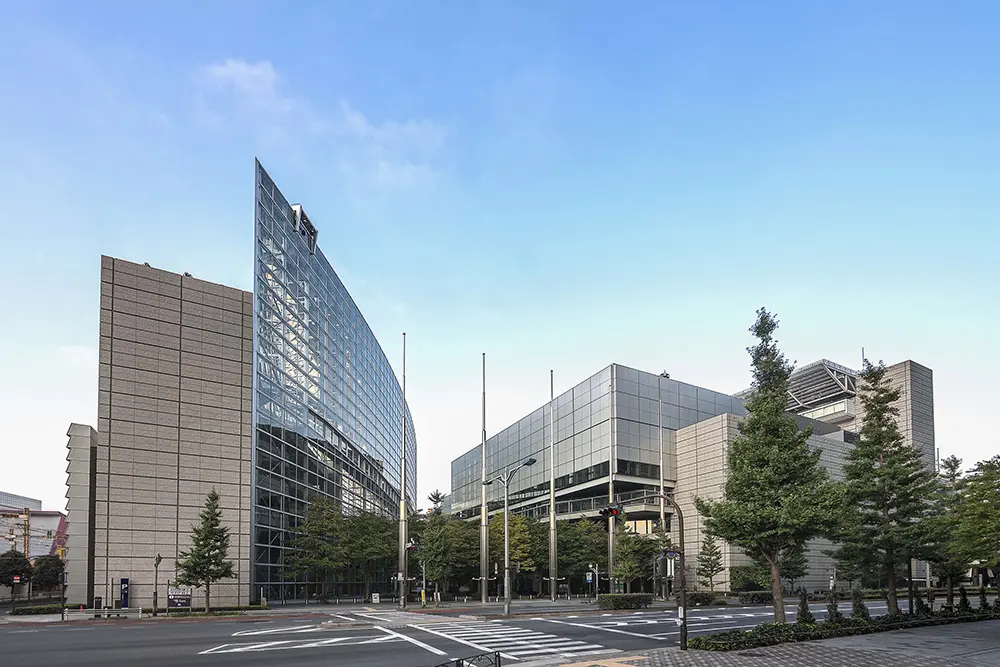
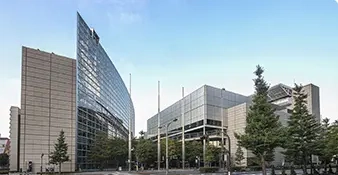
Tokyo International Forum D1, D5 & D7 Halls
Supported by